

In today’s hyper-connected digital landscape, a visually appealing website or application is no longer enough. To truly capture and retain your audience, you need to deliver an experience that is intuitive, efficient, and genuinely enjoyable. This is where UX Design, or User Experience Design, becomes the cornerstone of your digital strategy. It’s the silent architect behind every successful digital product, meticulously crafting interactions that delight users and drive business objectives. At MAKREATE IT SERVICES CO LLC, we understand that exceptional UX isn’t just a feature; it’s a fundamental necessity for achieving lasting digital success.
What Exactly is UX Design? More Than Just Pretty Interfaces
UX Design is a holistic, multidisciplinary field focused on enhancing user satisfaction by improving the usability, accessibility, and pleasure provided in the interaction with a product. It encompasses every aspect of a user’s interaction with a company’s product or service, aiming to create seamless, meaningful, and relevant experiences. From the moment a user first encounters your product to their ongoing engagement, UX design shapes their journey, emotions, and perceptions.
Differentiating UX from UI
While often used interchangeably, UX (User Experience) and UI (User Interface) design are distinct yet complementary disciplines. Think of it this way: UX design is like the architecture of a house – it plans the layout, functionality, and overall flow, ensuring it meets the inhabitants’ needs and provides a comfortable living experience. UI design, on the other hand, is the interior decoration – it focuses on the aesthetics, visual style, and interactive elements like buttons, typography, and color schemes. A great house needs both solid architecture and beautiful interior design; similarly, a great digital product needs both exceptional UX and compelling UI.
The Multidisciplinary Nature of UX
UX design draws on a wide array of fields, including psychology, anthropology, computer science, graphic design, and marketing. UX designers employ research methodologies to understand user behaviors, needs, and motivations. They analyze data, create user personas, map customer journeys, and conduct usability testing to inform their design decisions. This rigorous, user-centric approach ensures that every design choice is backed by insight, not just intuition.
Why Invest in UX Design? The Business Impact
Investing in professional UX Design is not merely an expense; it’s a strategic investment that yields significant returns across various business facets. In a competitive market, a superior user experience can be your most powerful differentiator, leading to increased customer loyalty, higher conversion rates, and reduced operational costs.
Boosting Customer Satisfaction and Loyalty
A well-designed user experience anticipates user needs, simplifies complex tasks, and provides clear, consistent feedback. When users find a product easy, enjoyable, and efficient to use, their satisfaction skyrockets. Satisfied users are more likely to return, recommend your product to others, and become loyal customers. In essence, positive user experiences foster trust and build strong, lasting relationships between your brand and its audience.
Driving Conversions and Revenue
An intuitive and streamlined user journey directly impacts your bottom line. By removing friction points, clarifying calls to action, and optimizing navigation, UX design can significantly increase conversion rates—whether that’s signing up for a service, making a purchase, or downloading an app. A better experience means more users completing desired actions, translating directly into increased revenue and business growth. It’s about making it effortless for users to achieve their goals, which in turn helps your business achieve its goals.
Reducing Development Costs and Support Burden
Investing in UX design early in the development cycle can prevent costly reworks down the line. Thorough user research and testing identify potential issues before they become expensive problems. Furthermore, an intuitive interface reduces the need for extensive training and customer support, as users can easily navigate and understand your product on their own. This operational efficiency translates into substantial savings in development, maintenance, and support costs, proving that good design is indeed good business.
The Core Pillars of Effective UX Design
Effective UX Design is built upon several foundational principles that guide designers in creating truly user-centric products. These pillars ensure that the final product is not only aesthetically pleasing but also functional, accessible, and deeply satisfying for its intended audience.
User Research and Empathy
At the heart of great UX is a deep understanding of the user. User research involves various methods like interviews, surveys, usability testing, and ethnographic studies to gather insights into user behaviors, motivations, pain points, and goals. Developing empathy for users means stepping into their shoes, understanding their context, and designing solutions that genuinely address their needs and challenges. This foundational step ensures that design decisions are evidence-based and user-focused.
Information Architecture and Content Strategy
Information Architecture (IA) focuses on organizing, structuring, and labeling content in an effective and sustainable way. It’s about making information findable and understandable. A clear IA allows users to navigate a product effortlessly and find what they’re looking for without frustration. Complementing IA, a strong Content Strategy ensures that the information itself is relevant, valuable, and presented in a way that resonates with the user, guiding them through their journey with clarity and purpose.
Usability and Accessibility
Usability refers to how easy and pleasant a product is to use. A highly usable product is efficient, learnable, memorable, and forgiving of errors. Accessibility, on the other hand, ensures that products are usable by people with the widest range of abilities, including those with disabilities. Designing for accessibility isn’t just good ethics; it expands your potential audience and often leads to better design for all users. These two pillars are non-negotiable for creating truly inclusive and effective digital experiences.
Interaction Design and Visual Hierarchy
Interaction Design (IxD) focuses on creating engaging interactive systems. It defines how users interact with the product – the gestures, clicks, and feedback mechanisms. Good IxD makes interactions feel natural and responsive. Visual Hierarchy uses design elements like size, color, contrast, and placement to guide the user’s eye, emphasizing important information and actions. Together, IxD and visual hierarchy ensure that the user’s journey is not only functional but also visually guided and emotionally engaging.
The UX Design Process: A Strategic Approach
The UX design process is an iterative, user-centered methodology that guides a product from concept to launch and beyond. While specific steps can vary, it generally follows a structured approach that prioritizes understanding users and continually refining solutions based on feedback. At MAKREATE IT SERVICES CO LLC, we follow a proven process to deliver outstanding user experiences.
Discovery and Research
This initial phase is all about understanding the problem space, the target audience, and business goals. We conduct in-depth user research, competitor analysis, stakeholder interviews, and market research. The goal is to gather comprehensive insights to define the project scope, identify user needs, pain points, and define key objectives. Deliverables typically include user personas, empathy maps, and problem statements.
Ideation and Wireframing
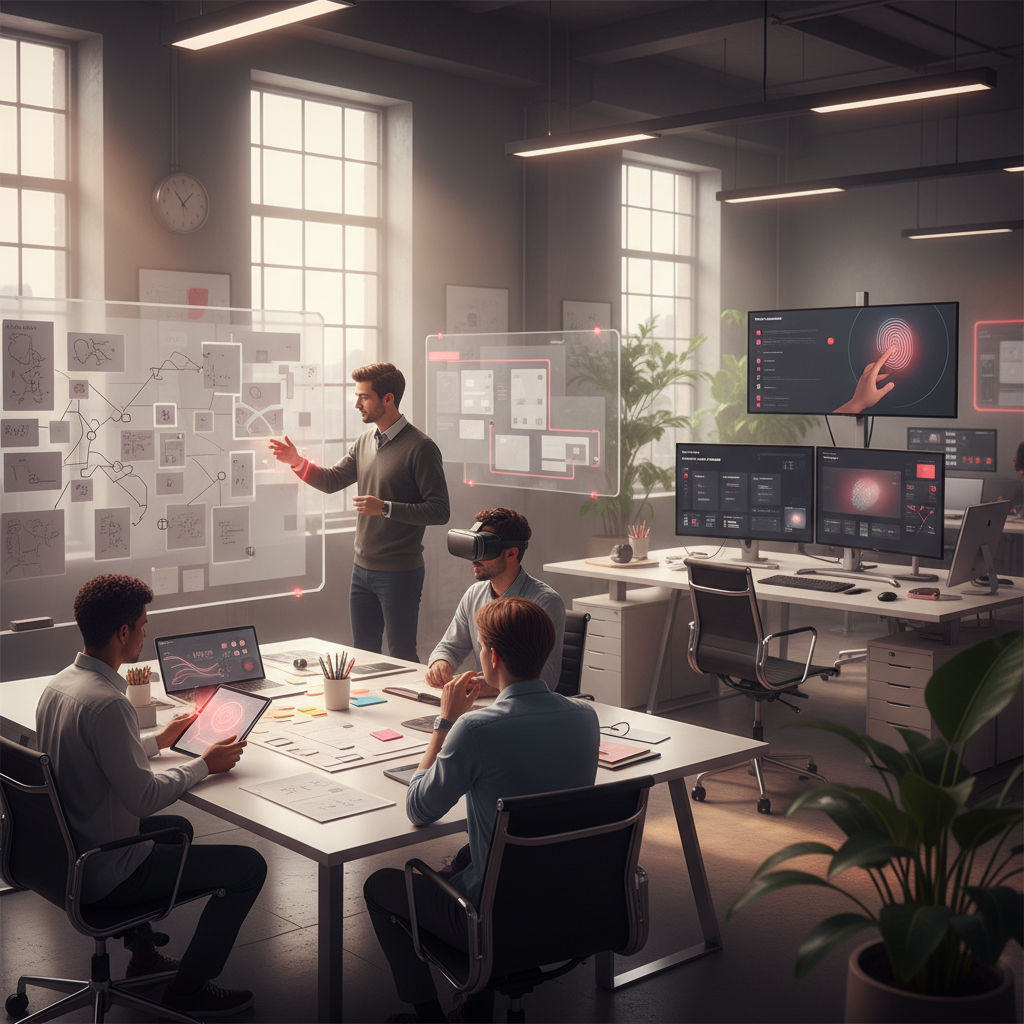
With a clear understanding of the users and goals, the next step is to brainstorm potential solutions. This involves creative problem-solving sessions, sketching out ideas, and developing wireframes. Wireframes are low-fidelity visual representations of a product’s interface, focusing on layout, content structure, and functionality rather than visual aesthetics. They serve as blueprints, allowing us to quickly test and refine structural ideas.
Prototyping and Testing
After wireframing, prototypes are created. These are interactive mockups that simulate the final product’s functionality, allowing users to interact with the design before any code is written. Usability testing is then conducted with real users to observe their interactions, identify areas of confusion or difficulty, and gather feedback. This iterative cycle of prototyping and testing is crucial for refining the design and ensuring it meets user needs effectively.
Implementation and Iteration
Once the design has been validated through testing, it moves into the development phase for implementation. However, the UX process doesn’t end there. Post-launch, continuous monitoring through analytics and user feedback is essential. This data informs further iterations and improvements, ensuring the product evolves to meet changing user needs and market demands. UX is an ongoing journey of refinement and enhancement.
Measuring the Success of Your UX Design Efforts
To truly understand the impact of your UX design investment, it’s crucial to establish clear metrics and continuously track performance. Measuring success allows for data-driven decision-making, justifying design choices and proving ROI.
Key Performance Indicators (KPIs)
Several Key Performance Indicators (KPIs) can help gauge the effectiveness of your UX. These include:
- Task Success Rate: The percentage of users who successfully complete a specific task.
- Time on Task: How long it takes users to complete a task.
- Error Rate: The number of mistakes users make while interacting with the product.
- Conversion Rate: The percentage of users who complete a desired action (e.g., purchase, sign-up).
- Retention Rate: How many users return to use the product over time.
- System Usability Scale (SUS) Score: A standardized questionnaire for subjective usability assessment.
By regularly tracking these and other relevant KPIs, businesses can objectively evaluate the impact of their UX design efforts and identify areas for improvement.
User Feedback and Analytics
Beyond quantitative KPIs, user feedback provides invaluable qualitative insights. This can be gathered through surveys, interviews, focus groups, and even direct comments within the product. Combining this with analytics data (e.g., Google Analytics, Hotjar) allows for a comprehensive understanding of user behavior. Analytics can reveal where users drop off, what features are most used, and common navigation paths, providing concrete data points to inform design optimizations.
Partnering for UX Excellence: Why Choose MAKREATE IT SERVICES CO LLC
Choosing the right partner for your UX Design needs is critical for achieving your business objectives. At MAKREATE IT SERVICES CO LLC, we bring a wealth of expertise, a user-centric approach, and a proven track record of delivering impactful digital experiences across various industries and locations, including the USA, UAE, Middle East, and the UK.
Our Expertise in Delivering Impactful UX Solutions
MAKREATE IT SERVICES CO LLC specializes in crafting engaging and intuitive digital products that resonate with your target audience. Our team of seasoned UX design experts possesses a deep understanding of user psychology, interaction design principles, and the latest industry trends. We leverage cutting-edge tools and methodologies to ensure every solution we deliver is not only beautiful but also highly functional and effective in achieving your business goals. Whether it’s a new product launch or optimizing an existing platform, our expertise translates into tangible results.
A Client-Centric Approach to Digital Innovation
We believe that the best UX design emerges from a collaborative partnership. Our approach is fundamentally client-centric, ensuring that your vision, business objectives, and unique challenges are at the forefront of every design decision. We engage with you at every stage, from initial discovery to post-launch iteration, fostering transparency and ensuring that the final product truly reflects your brand’s identity and meets your users’ evolving needs. Our commitment to innovation and excellence makes us the ideal partner for your digital journey.