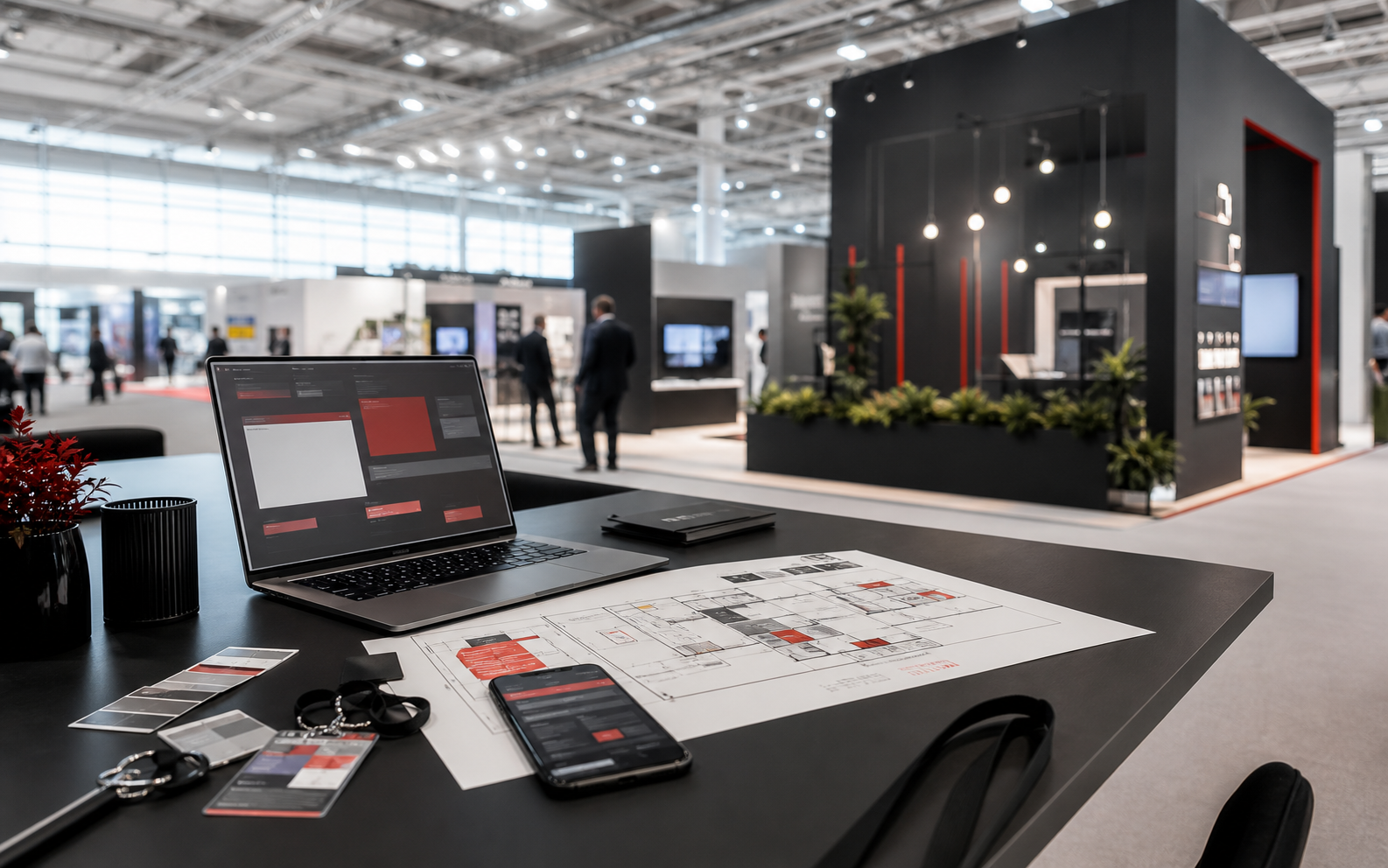
Choosing a trade show marketing agency is different from hiring a general digital marketing team. Event campaigns have fixed dates, venue realities, partner deliverables and a short window to create momentum.
A strong agency should help the event become easier to understand and easier to act on. That means sharper positioning, better landing pages, practical media planning, production-ready creative and a follow-up system that protects the value of every serious inquiry.
This guide is written for event organizers, conference teams, B2B expo brands and companies exhibiting in Dubai, the UAE, the UK or the US. It connects closely with Makreate's Events & Trade Shows industry work, advertising service, graphic design, social media design and website design and development practice.
1. Start with the commercial shape of the event
Before channels or creative, clarify what the event needs commercially. Visitor acquisition, delegate registration, exhibitor sales, sponsor demand, meeting booking and post-event retention are related, but they do not use the same message or funnel.
A useful agency should ask:
- Who must register, exhibit, sponsor or book a meeting?
- Which audience has the shortest decision window?
- Which markets matter most: local, regional or international?
- What proof already exists from previous editions, partners or speakers?
- Which actions should be measured before the venue opens?
2. Separate visitor, exhibitor and sponsor messaging
Trade show campaigns often fail because one generic message is stretched across all audiences. Visitors want relevance, convenience and proof that the event is worth their time. Exhibitors and sponsors care about audience quality, category fit, commercial access and brand presence.
The agency should be able to build messaging layers for each audience. A visitor landing page may highlight sectors, agenda, networking and registration clarity. An exhibitor page may need booth options, lead value, buyer profiles, past participation signals and a direct sales inquiry path.
This is especially important in Dubai and wider UAE event marketing, where regional attendance, international exhibitors and government or enterprise stakeholders may all sit inside one campaign. UK and US campaigns often need similarly clear segmentation across cities, industries and ticket types.
3. Make landing pages part of the campaign, not an afterthought
Paid media cannot fix an unclear event page. Before spending seriously, the agency should review whether the landing page explains who the event is for, why the timing matters, who is involved, what action to take and what happens after the form is submitted.
For event and trade show campaigns, strong landing pages usually include:
- Clear audience-specific headline and event promise.
- Fast registration or inquiry path with minimal friction.
- Speaker, exhibitor, sponsor or partner signals when available.
- Agenda, sector, location and format details that reduce uncertainty.
- Tracking-ready forms and source attribution for lead quality review.
Makreate's website and landing page work matters here because a trade show campaign is only as strong as the page that receives the attention. The page must help the sales or registration team, not just look presentable.
Need sharper marketing for your next trade show?
Makreate helps event teams connect positioning, landing pages, paid media, social creative, design collateral and follow-up systems.
4. Check whether the agency can produce creative at event speed
Event marketing has a heavier creative load than many teams expect. Campaigns need paid ads, organic social posts, speaker announcements, exhibitor creatives, venue graphics, brochures, presentation templates, email banners and sometimes last-minute sponsor assets.
Ask how the agency manages production volume without losing consistency. The right partner should work from a clear visual system and content calendar, then adapt assets quickly across formats. That includes design details such as safe areas, legible hierarchy, export sizes and platform-specific cropping.
Makreate's graphic design and social media design services are directly relevant because event marketing often needs both brand-level discipline and high-volume execution.
5. Compare paid media strategy by intent, not channel names
Google, LinkedIn, Meta and programmatic placements can all play a role, but the channel list is less important than the intent behind each campaign. Search can capture active demand. LinkedIn can support B2B audience targeting. Meta can help with reach, retargeting and creative testing. Email and outreach can support direct follow-up when the data and consent model are appropriate.
A strong agency should explain how media spend connects to the event calendar. Early campaigns may test positioning and build remarketing pools. Mid-window campaigns may push registrations or exhibitor inquiries. Final-window campaigns may focus on urgency, attendee reminders and retargeting. Post-event campaigns should help convert conversations into pipeline or future attendance.
Good event marketing is not just launch noise. It is a timed system that turns attention into registered visitors, exhibitor demand and useful post-event conversations.
6. Plan post-event follow-up before the event starts
Many teams wait until after the event to think about follow-up. That creates slow responses, weak segmentation and missed context. The agency should help define how leads, meeting requests, scanned badges, website forms and campaign inquiries will be routed before the event begins.
Practical follow-up planning includes source tagging, audience labels, sales scripts, email sequences, LinkedIn follow-up, CRM routing and a simple definition of what counts as a qualified conversation. This is where Makreate's LinkedIn outreach automation and email outreach automation can support the event campaign without turning it into spam.
7. A practical 90-day trade show marketing rollout
A focused event marketing plan can move quickly when the work is sequenced properly. A practical rollout often looks like this:
- Days 1-15: audience segmentation, offer clarity, campaign calendar and measurement plan.
- Days 16-35: landing pages, tracking setup, creative system and core campaign messages.
- Days 36-65: paid media launch, social content, exhibitor or sponsor assets and optimization.
- Days 66-80: urgency campaigns, retargeting, sales enablement and onsite collateral checks.
- Days 81-90: post-event follow-up, reporting, content reuse and next-edition learning.
The goal is not to make the campaign complicated. The goal is to make every part of the event funnel visible enough that the team can improve it before the deadline passes.
Frequently asked questions
What should a trade show marketing agency handle?
A strong agency should help with event positioning, audience segmentation, landing pages, paid media, social creative, email or LinkedIn follow-up, booth collateral and measurement around qualified conversations.
When should event teams hire a trade show marketing agency?
Hire early enough for strategy, page production, campaign setup, creative approvals and follow-up systems to be ready before the main promotional window starts.
Is trade show marketing different from normal B2B marketing?
Yes. Trade show campaigns work inside fixed dates, venue constraints, exhibitor and visitor audiences, sponsor deliverables, partner deadlines and a short post-event follow-up window.
Which channels matter most for trade show marketing?
The channel mix depends on the audience, but strong programs usually connect landing pages, Google Ads, LinkedIn, Meta, email, organic social, onsite collateral and sales follow-up.
How does Makreate support trade show marketing?
Makreate supports event and trade show teams with branding, advertising, graphic design, social media, landing pages, website production and outreach systems built around event timelines.
Comments
No comments yet. Be the first!