If you're evaluating a cybersecurity website design agency, the real question is not whether they can make the site look modern. The real question is whether they understand how security buyers evaluate risk, credibility, and technical relevance online.
That matters because cybersecurity websites sit in a difficult category. The products are often complex. The buyers are skeptical by default. The language can easily become either too vague for technical evaluators or too dense for commercial stakeholders. And if the site misses that balance, even high-intent traffic from search, ads, referrals, or outbound will leak.
At Makreate, this is the part we pay attention to across cybersecurity, cloud, and B2B infrastructure work. The website has to do a specific job: make a serious buyer feel that your company is credible, capable, and worth a deeper sales conversation. Everything else is secondary.
1. Most cybersecurity websites have a trust problem before they have a traffic problem
A lot of teams assume the issue is traffic. Sometimes it is. But more often, the first issue is that the current website does not give visitors enough confidence to keep moving. Positioning is vague. Headlines sound interchangeable. Product pages list features without explaining who the product is for or what operational problem it solves. Case studies are thin or absent. The design feels generic rather than deliberate.
That is expensive because the kinds of buyers cybersecurity companies want do not give the benefit of the doubt easily. A CISO, security lead, or enterprise technology buyer is actively looking for reasons to disqualify vendors. Your site should reduce uncertainty, not introduce more of it.
2. Your site is rarely speaking to one person
Cybersecurity buying journeys usually involve multiple viewpoints. One visitor wants to know whether the solution is technically credible. Another wants to know whether it is relevant to a specific industry, team size, or threat environment. Another wants to know whether the company behind it feels established enough to trust with an important security workflow.
That is why good cybersecurity web design is usually less about flashy interaction and more about information hierarchy. The best sites make it easy for different kinds of visitors to self-select their path without getting lost. Clear navigation, strong industry or use-case pages, and relevant proof matter more than decorative complexity.
For companies moving upmarket, this becomes even more important. A buyer in New York, London, or Dubai may arrive through different channels, but they all want the same reassurance: this company understands the category, speaks plainly, and has done this kind of work before.
3. The five page types that usually matter most
Before publishing long-tail content or scaling SEO aggressively, most cybersecurity companies should make sure the base sales architecture is strong. In practice, five page types tend to do most of the work.
- A homepage with crisp positioning, not abstract brand language.
- Product or service pages that explain outcomes, users, and delivery clearly.
- Industry or use-case pages that map the offer to real buyer contexts.
- Proof pages such as results, case studies, testimonials, or relevant work.
- Company and conversion pages that make the next step obvious and low friction.
Makreate already structures this kind of depth across service and vertical pages, from website development and UX design to dedicated industry pages like Cybersecurity. That architecture is useful because it mirrors how high-intent buyers actually investigate vendors.
4. Messaging has to be technically credible without becoming unreadable
This is where many generic agencies struggle. They can redesign a page, but they cannot rewrite a security offer in a way that preserves technical seriousness while still being commercially understandable.
For example, a cybersecurity site should not rely on empty language like “cutting-edge protection” or “innovative digital defense” unless the page immediately grounds that claim in specifics. Buyers respond better when the site explains categories, workflows, problems, integrations, operating environments, or delivery models in plain language.
That does not mean stuffing the site with jargon. It means choosing the right amount of specificity. A good cybersecurity website design agency should know when to simplify, when to stay precise, and when to structure content so different readers can go deeper only if they want to.
This is also why branding matters more than many security teams expect. A stronger brand system can make serious technical content easier to absorb because it gives the site consistency, clarity, and visual restraint rather than noise.
5. Design signals matter because buyers infer capability from the interface
Whether fair or not, buyers judge operational maturity from the website. If the interface feels chaotic, inconsistent, or unclear, people project that disorder onto the product and team behind it. In cybersecurity, where trust is central, that projection is especially strong.
Good design signals are usually quiet. Consistent spacing. Strong typography. Clear page hierarchy. Thoughtful use of proof. Visual restraint. Fast-loading assets. Clean mobile behavior. Sharp conversion points. None of this needs to feel flashy. It needs to feel controlled.
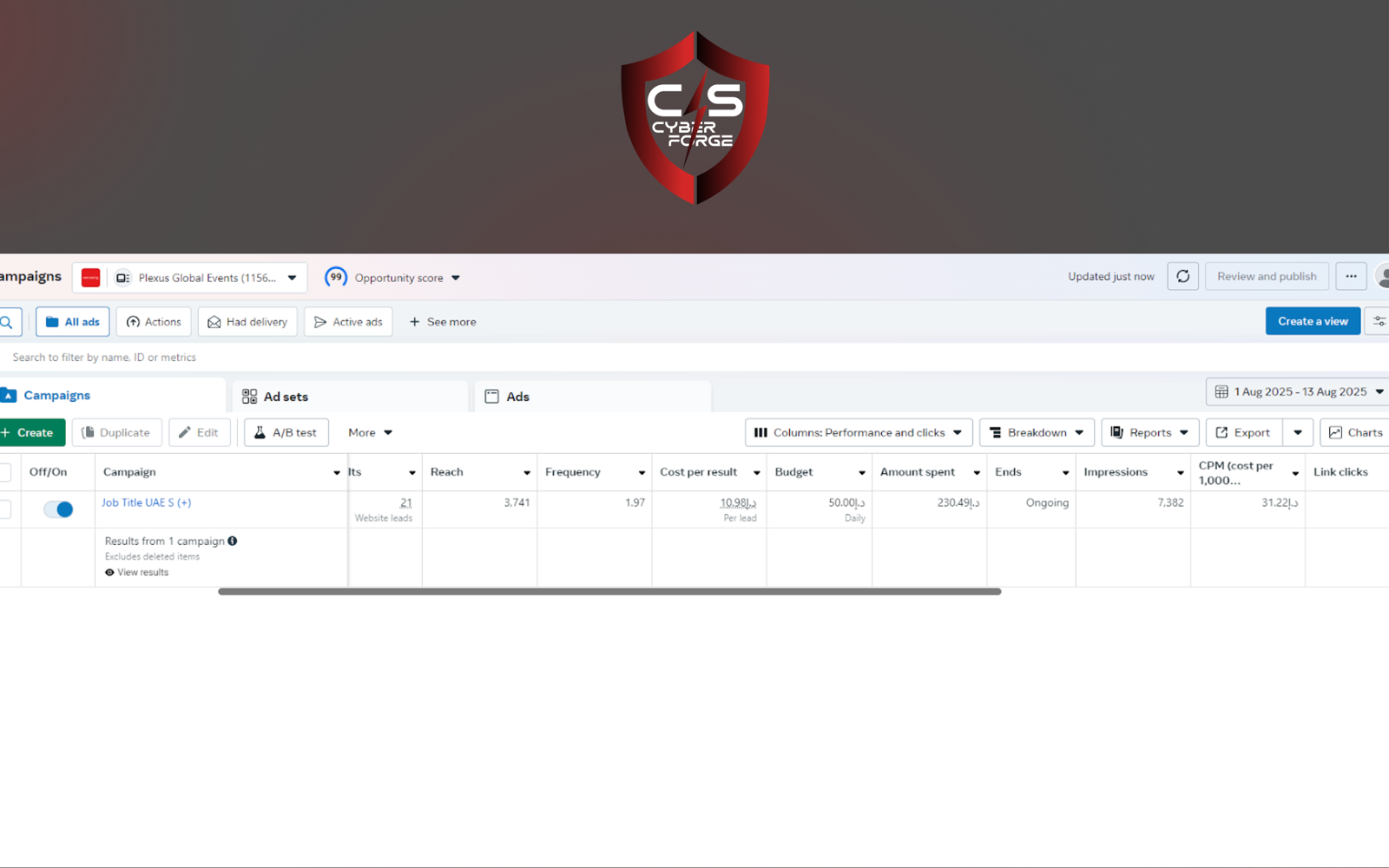
Some of the strongest examples in Makreate's orbit come from adjacent cybersecurity and cloud work, such as Orbis Cloud and campaign work like CyberForge Abu Dhabi. The point is not to make every security company look the same. The point is to make the site feel category-aware and credible.
6. Conversion paths should fit how serious buyers actually buy
A generic “Contact Us” button is rarely the strongest primary CTA for cybersecurity companies. Better-performing paths usually give the visitor a more specific next step. That might be a product demo, an audit consultation, an architecture review, a use-case discussion, or a scoped discovery call.
In practice, two conversion paths often work best:
- A primary CTA for the buyer who is already problem-aware and ready to speak.
- A secondary CTA for the buyer who needs more confidence before talking.
The secondary path can be as simple as a results page, a relevant case study, or a clearer “how we work” explanation. The point is not to force every visitor into the same action. It is to create a path that matches their current confidence level.
7. SEO should amplify a strong sales architecture, not compensate for a weak one
Cybersecurity SEO works better when the money pages are already strong. If your commercial pages are weak, publishing more articles will not solve the underlying conversion problem.
That said, this category does have strong commercial-intent search opportunities. Buyers look for agencies, consultants, design partners, website specialists, and industry-specific operators. They also search through problem-and-solution combinations tied to sectors, regions, and service types. That is why content should connect back to strong commercial destinations like your SEO, website development, and cybersecurity industry pages.
For Makreate, that also extends into market pages for teams operating in the US, UK, and UAE. Geographic relevance alone does not close deals, but it can reduce friction for buyers who want confidence that the agency understands their working context.
8. When a cybersecurity company should hire a website design agency
Usually when one of four things is true:
- The company has evolved, but the site still reflects an earlier stage.
- The product is difficult to understand quickly.
- The team wants more qualified demos, not just more traffic.
- The business is moving into a more demanding market segment and the current site does not support that move.
If that sounds familiar, the right agency is not the one with the prettiest dribbble-style mockups. It is the one that can align UX, conversion thinking, category messaging, and a credible visual system into one sales-ready website.
Need a cybersecurity website that converts serious buyers?
Makreate works with US, UK, UAE, and India teams on positioning, UX, web design, and growth systems for complex B2B categories. We can review your current site and show where trust and conversion are leaking.
Frequently asked questions
What should a cybersecurity website include?
At minimum: clear positioning, product or service pages, proof, use cases, trust signals, technical depth for evaluators, and a low-friction conversion path such as demo, audit, or consultation.
Why is cybersecurity web design different from generic B2B web design?
Cybersecurity buyers are typically risk-sensitive, skeptical, and multi-stakeholder. Your site has to explain complex products without oversimplifying, while also showing technical credibility and commercial relevance.
Should cybersecurity companies invest in SEO or sales pages first?
Sales pages first. If high-intent visitors land on weak product, industry, or proof pages, SEO traffic will not convert well. Build the conversion architecture first, then expand SEO around it.
How do you make a cybersecurity website feel trustworthy?
Use precise positioning, clean information hierarchy, meaningful proof, real team or company context, consistent design systems, and remove vague claims that cannot be supported.
When should a cybersecurity company hire a website design agency?
Usually when the existing site no longer matches the product, the company has moved upmarket, conversion quality is weak, or the team cannot explain technical value clearly to both security and commercial buyers.


Comments
No comments yet. Be the first!