
Cybersecurity companies rarely need more content for content's sake. What they usually need is better structure: clearer commercial pages, stronger proof, cleaner technical foundations, and content that maps to the way security buyers actually evaluate vendors.
That matters because cybersecurity search behavior is unusually trust-sensitive. Buyers are not casually browsing. They are comparing vendors, validating capabilities, pressure-testing claims, and looking for a team that sounds credible before they ever book a call.
If your site ranks but does not convert, the problem is usually not just SEO. It is positioning, information architecture, proof design, and page intent. Good cybersecurity SEO sits in the overlap between search strategy, website development, and conversion-focused UX design.
1. Why cybersecurity SEO is different from generic B2B SEO
Many B2B categories can get away with broad educational content and a thin service page. Cybersecurity cannot. The category is crowded, technical, and full of cautious buyers who notice vague language immediately. If your copy sounds inflated, generic, or too abstract, rankings may still happen, but trust erodes before pipeline starts.
Cybersecurity SEO also serves a wider buying committee than many teams expect. A founder or CMO may initiate research, but security leads, technical evaluators, procurement, and compliance stakeholders often influence the decision. That means pages have to be persuasive without becoming fluffy, technical without becoming unreadable, and commercial without sounding aggressive.
This is one reason Makreate's cybersecurity industry positioning matters. Industry context changes the language, page hierarchy, and proof structure that work.
2. Build the commercial page architecture before chasing blog volume
A common failure mode is publishing twenty articles before the core money pages are ready. In cybersecurity, the first SEO lift usually comes from strengthening the pages closest to revenue. Those pages tell Google what the business actually does and tell buyers where to go next.
For most teams, the first layer includes a sharp homepage, focused service or solution pages, industry or use-case pages, and comparison pages for evaluation-stage queries. If you offer managed detection, cloud security, vCISO, compliance support, pentesting, or security consulting, each offer needs its own landing page with distinct intent and supporting internal links.
Commercial architecture is also where many cybersecurity teams underinvest in specificity. A page titled “Our Services” is too broad. A page built around a real buying intent, with clear scope, who it is for, what happens next, and supporting proof, is much easier to rank and much more likely to convert.
3. Trust architecture matters as much as rankings
Search visibility gets the click. Trust architecture gets the meeting. On a cybersecurity site, that trust architecture should show up everywhere: author clarity, team credibility, clean writing, clear capability boundaries, FAQ handling, case-study proof, and interfaces that feel stable rather than improvised.
That does not mean overloading every page with badges and dense jargon. It means making credibility legible. Explain what you do in plain language, show who you work with, define what a prospect should expect in the engagement, and avoid sweeping claims you cannot substantiate.
From an SEO perspective, this also improves page quality. Pages with clearer headings, tighter scope, supporting FAQs, and stronger internal context are easier for search engines to understand and easier for prospects to scan.
4. Use a keyword strategy built around buying stages, not just search volume
Cybersecurity keyword research should start with buyer stages. Awareness queries can build reach, but evaluation and decision-stage queries usually drive the best commercial outcomes. A balanced program normally includes problem-aware terms, solution-aware terms, and decision-stage comparisons.
For example, a security company may target pain-point searches around vendor selection, implementation questions, compliance friction, or migration challenges. It may also target service-intent queries that clearly signal demand, plus category comparisons where buyers are deciding between approaches or providers.
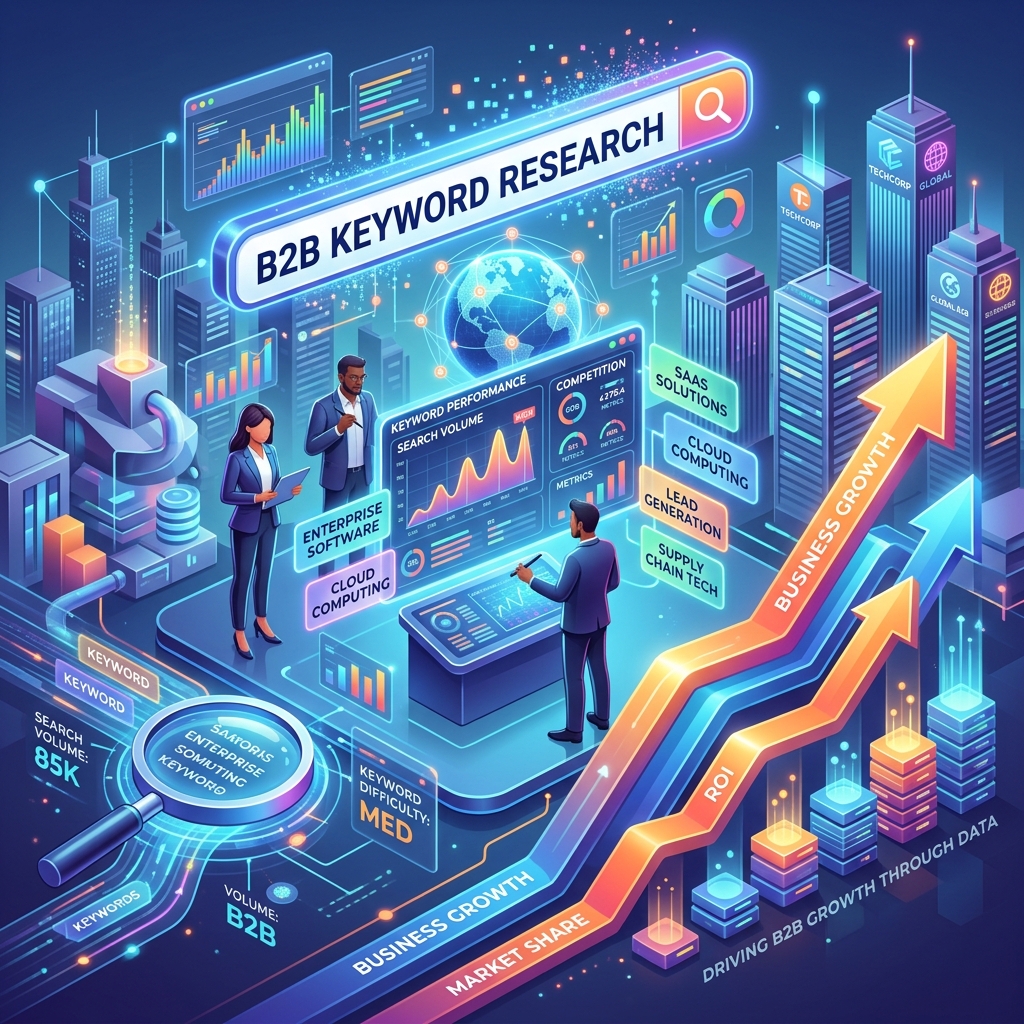
The test is simple: if a keyword ranked tomorrow, would the resulting visitor plausibly move into a real pipeline? If the answer is no, it may still be worth publishing, but it should not dominate the roadmap. Makreate's article on keyword research for B2B businesses is a useful companion here.
5. Create topic clusters around real security buying questions
Once the commercial pages exist, content can expand around them. The strongest cybersecurity content programs are not random blogs; they are clusters. Each cluster supports a core offer and answers adjacent questions a buyer would reasonably have before contacting a vendor.
A managed security provider, for example, might build around topics such as in-house versus outsourced monitoring, onboarding expectations, response workflows, compliance readiness, or what changes when a team outgrows its current setup. A cloud-security specialist might build around architecture reviews, posture management, remediation workflows, and implementation priorities.
That content should feed back into the money pages through internal links, repeated positioning cues, and consistent terminology. If the site's educational content and commercial pages sound like they were written by two different businesses, trust drops.
6. Technical SEO still matters, especially on complex cybersecurity sites
Cybersecurity websites often accumulate technical debt faster than expected. Long navigation trees, resource libraries, PDFs, gated pages, duplicated solution copy, and fragmented templates can make it hard for search engines to understand what deserves to rank.
The practical fixes are usually straightforward: make sure priority pages are crawlable, keep internal links deliberate, avoid orphan pages, clean up duplicate title and heading patterns, improve page speed, and ensure mobile layouts do not bury the primary conversion path. Schema can help with clarity, but it does not rescue weak page strategy.
This is also where design and development work affect search performance directly. A technically polished page that loads cleanly, explains the offer clearly, and routes visitors into the next step will usually outperform a more cluttered competitor even before deeper content work begins.
7. Conversion design is part of cybersecurity SEO
Cybersecurity buyers do not always want a hard sales CTA on the first visit. Some want a consultation, some want to validate capability, and some want to speak only after they believe the team understands their environment. Your organic landing pages should support those different readiness levels.
That usually means a strong primary CTA, a lower-friction secondary CTA, and proof elements positioned before the form feels premature. Good examples include concise discovery-call framing, downloadable capability overviews, clear process explanation, and links to relevant case studies or industry pages.
If the form asks too much, the page overexplains, or the site forces every visitor into the same funnel step, rankings may grow while conversion stays flat. Cybersecurity SEO is not successful when traffic is up and qualified conversations are unchanged.
8. A practical 90-day cybersecurity SEO plan
In the first 30 days, focus on foundations: audit indexable pages, identify the real commercial intents, tighten the homepage and key offer pages, fix internal linking, and define the trust signals that should appear across the site.
In days 31 to 60, build or rewrite the priority money pages, launch the first supporting topic cluster, improve conversion paths, and align content language with the sales conversation. This is also the point to close obvious template or performance issues.
In days 61 to 90, publish the next wave of high-intent content, add comparison or industry pages, strengthen cross-linking, and review which queries are bringing the right traffic. The goal is not maximum content output. The goal is a system that compounds.
If your team already knows what should exist but does not have the capacity to execute it, that is usually the moment to bring in a specialist SEO partner rather than stretching internal marketing even thinner.
Need a cybersecurity SEO partner that can also fix the site?
Makreate works with B2B teams across the US, UK, UAE and Dubai on SEO, UX, websites, and positioning. If rankings, trust, and conversion all need work, we can handle them together.
Frequently asked questions
Why is cybersecurity SEO different from generic B2B SEO?
Because the buyer is more skeptical, the subject matter is more technical, and credibility matters earlier in the journey. Your content has to rank and also prove that the team behind it is worth talking to.
What should a cybersecurity company publish first?
Start with your highest-intent pages: core services, solutions, use cases, industries, and comparison pages. Supporting blog content should reinforce those pages, not distract from them.
Should we optimize for traffic or qualified leads?
Qualified demand first. Organic traffic only matters if it brings the right buyers into the funnel or helps them move closer to a sales conversation.
How long does cybersecurity SEO usually take?
Structural and page-quality improvements can happen quickly, but durable ranking and conversion gains usually come from consistent work over several months rather than one-off publishing bursts.
When should we hire an SEO agency instead of doing it in-house?
When the work spans strategy, technical cleanup, conversion design, and content execution at the same time. If internal marketing is already stretched, outsourcing the operating system is often faster than hiring one specialist at a time.


Comments
No comments yet. Be the first!